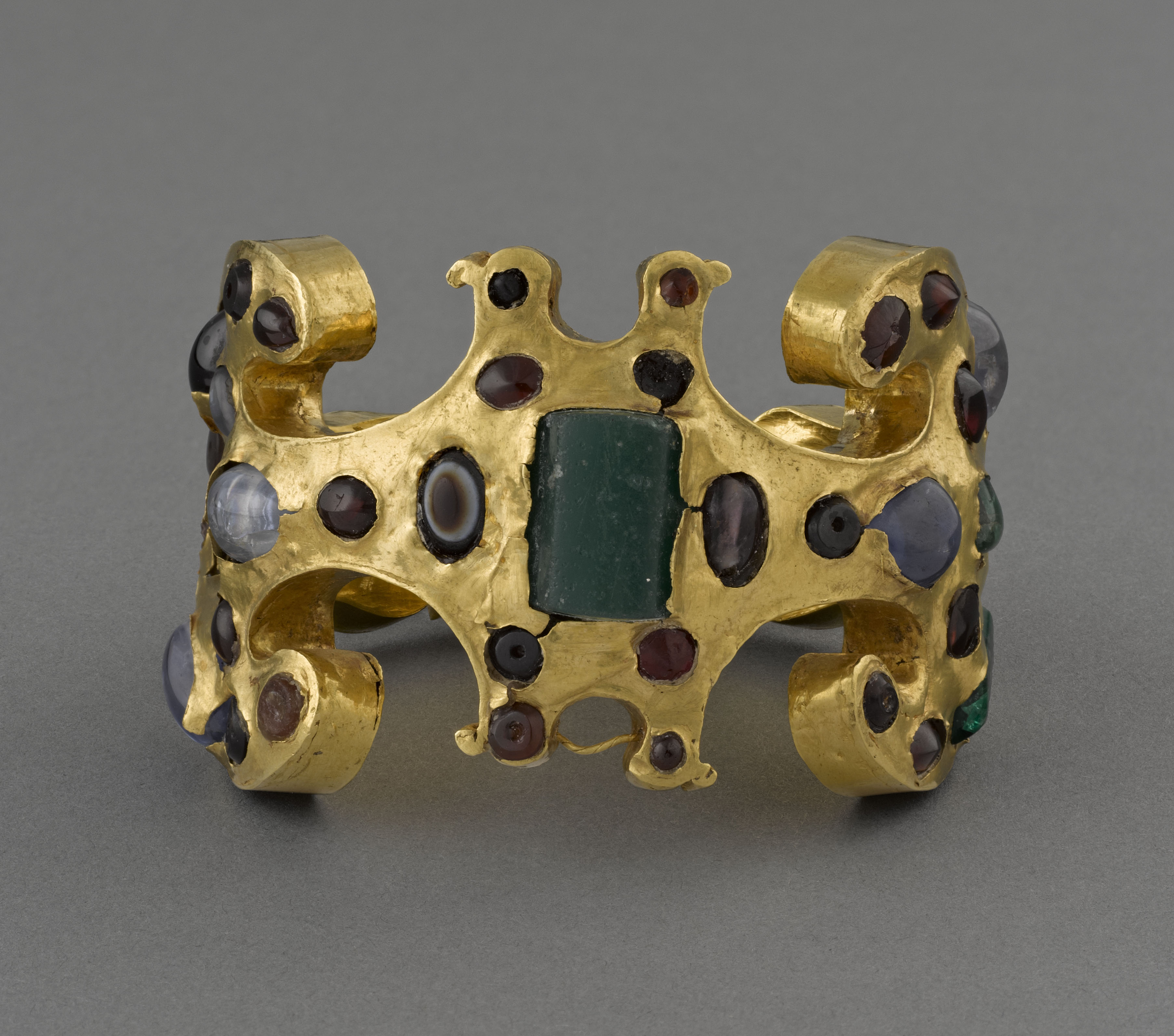
DUBAI: The UAE’s Louvre Abu Dhabi will open “10,000 Years of Luxury,” an exhibition that will explore the multifaceted nature of luxury from ancient times to the present day, on Oct. 30.
During the exhibition, which will run until Feb. 18, visitors can discover luxury through fashion, jewelry, visual art, furniture and design, with collections from international institutions and brands.
The Elie Saab dress is from the Spring/Summer 2019 collection. (Supplied)
Among the 350 objects displayed lies the oldest pearl in the world and the renowned “Boscoreale Treasure” — one of the largest collections of silverware preserved from Roman Antiquity. The show will feature dresses and jewelry from design houses such as Cartier, Maison Van Cleef & Arpels, Chanel, Christian Dior, Elie Saab and Yves Saint Laurent.
The “Ten-leaved Screen Foxes” was a gift of Prince Louis de Polignac, with the agreement of Yves Lanvin, in memory of Countess Jean de Polignac.(Supplied)
Visitors will begin their journey through the history of luxury in Antiquity. Luxury objects of this time were often characterized by their rarity, precious materials or skillful production, exemplified by an Egyptian gold “Necklace with Fish Pendants” (ca. 1550-1069 BCE). A variety of typical luxury objects from this time will also be on display, including precious home décor as well as personal jewelry.
Louvre Abu Dhabi will also premiere the interactive installation “Digital Snow Globes,” from Dec. 12 to Jan. 10, which will bring a festive winter spirit to the museum with visitor-activated snowstorms surrounding large-sized reproductions of artworks from “10,000 Years of Luxury” encased in snow globes.
LONDON: As Saudi Arabia and Japan’s relationship develops through the Saudi-Japan Vision 2030 partnership, the two countries are increasingly looking at ways to strengthen their cultural ties, with plans that include developing anime and boosting tourism.
Anime may at first appear to be a surprising means of enhancing cultural exchange between the Kingdom and Japan. But it is loved by younger Arabs, with up to 40 percent of young Saudis believed to be fans of anime, according to Ahmad Hawssah, founder of Koi Market, an anime online store based in Jeddah.
A poll by Arab News and YouGov, which asked residents across the MENA region a range of questions related to Japan, found that younger Arabs are significantly less well-informed about Japan than older generations.
But the survey showed positive signs of younger Arabs’ engagement with Japan. When asked to select the three things they most associate with Japan, 62 percent of younger Arabs chose anime, compared with only 16 of those aged over 40 — suggesting that, even though their overall levels of knowledge are lower, younger Arabs remain engaged with Japanese culture in ways that their older counterparts are not.
Anime, therefore, represents an ideal way of connecting young Saudis to a country that will be a significant strategic ally for the Kingdom in the coming years.
Moreover, the exchange is unlikely to only go one way. Increasingly, Saudis are talking about exporting their own anime, which will give international audiences, including those in Japan, a window into the Arab world.
A significant step in this direction is the Saudi anime film “The Journey,” a feature-length collaboration between Manga Productions, an affiliated company of Misk Foundation, and Japanese studio Toei Animation.
Misk Foundation was founded in 2011 by Crown Prince Mohammed bin Salman to develop youth leadership skills, and to focus on education, technology, media and culture.
“The Journey” will be set in the Arabian Peninsula in the distant past and will employ authentic details from the Kingdom’s history.
Interviewed by Arab News in May, Shinji Shimizu, Toei’s managing director, highlighted the film’s significance in fostering Japan-Arab relations. “It’s not just a movie, it’s about cultural exchange and forming a connection between countries,” he said.
CEO of Manga Productions, Bukhary Essam, has said the company intends to produce animation itself by 2030, allowing Saudi Arabia to present its own culture and characters to Japan and the wider world.
But anime is not the only means of strengthening cultural ties between the Kingdom and Japan. Another is tourism.
Tourism is a big industry in Japan, and many Arabs of all ages have a strong desire to visit. According to the poll by Arab News and YouGov, although only 4 percent of Arabs have previously visited Japan, 87 percent would like to go , revealing a major opportunity for the Japanese Travel and Tourism Association to increase visits from the region.
“The recent changes to the Saudi leisure tourism sector are groundbreaking,” Jeremy Alston, founder of VisitSaudi.travel, told Arab News. “Opportunities now exist for Japan and Saudi to collaborate around knowledge transfer, infrastructure development and for Japan to become an important source market of visitors to the Kingdom.”
Saudi Arabia has been making strides in its own tourism industry in recent years, and there is much to attract potential Japanese visitors — from food to natural wonders.
An increase in tourism would help to bolster knowledge and cultural understanding between the two countries as they map out a future in partnership.
Japan and GCC: A mutually beneficial partnershipYouGov poll: Japanese anime continues to draw Arab fansSurvey shows Japanese martial arts to be a big hit with ArabsCash dependence reveals paradox of Japanese society https://ift.tt/31LieJy October 28, 2019 at 12:00AM
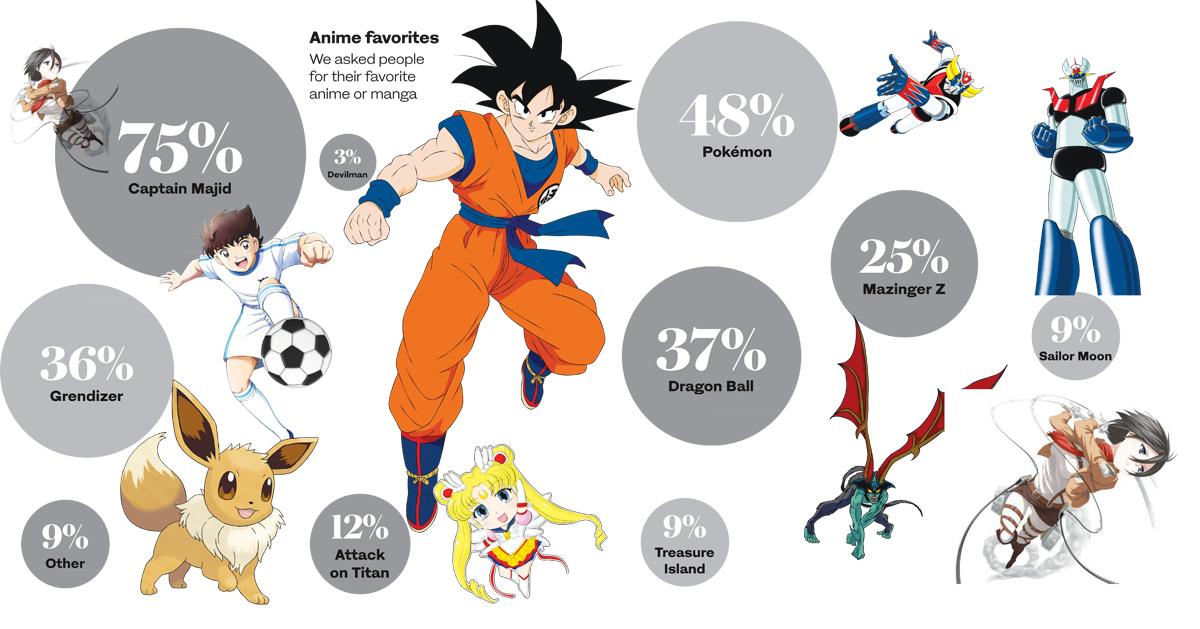
DUBAI: For many people who have grown up in the Arab world, watching dubbed Japanese anime series in Arabic was an essential part of their childhood. Some of the region’s most-loved titles include “Adnan wa Lina,” “Captain Majed,” “Al Mohakek Konan” and, of course, “Pokemon.”
A YouGov survey conducted by Arab News confirms the region’s celebration of the Japanese comic book genre, as 75 percent of respondents across all age groups ranked the long-running Japanese manga series, “Captain Tsubasa,” known as “Captain Majid” in the Arab world, as their favorite anime of all time.
Another popular series, “UFO Robot Grendizer,” was also voted a favorite among 56 percent of respondents aged 40 and older.
While anime dates back to the early 20th century, it has become a symbol of Japan’s culture.
The Arab world’s fascination with the genre was celebrated when 13 episodes of a Saudi- produced anime, called “The Woodcutter’s Treasure,” aired on Japanese television for the first time in 2018, in both Arabic and Japanese.
According to Maaz Sheikh, CEO and founder of STARZPLAY, anime’s strong presence in the Arab world goes beyond its story lines. “Anime relates to Arab viewers on a whole different level,” he told Arab News.
“It blends the individuality of established comic book series and animations with the unmatched style originally derived from manga comics in Japan, creating a unique world that allows any fan to escape into that world.”
Sheikh said feedback from STARZPLAY subscribers since 2018 indicated a large following in the region and a demand for its current top-ranked series.
“Based on the feedback we received, the ‘escapism’ element of anime seems to be the biggest social aspect of what makes them so appealing,” he said.
“Anime allows viewers to live vicariously through the outlandish characters in a way that would otherwise be impossible to view with a live-action Hollywood series.”
Fans have also voiced a strong interest in theatrical releases of blockbuster anime movies in the MENA region, which Sheikh says only confirms that there is a tremendous appetite for the comic-book genre in cinemas, and on a larger scale.
Among the younger generation aged between 16-24, anime series such as “Dragon Ball” proved to be commonly watched by 59 percent of respondents, with less appeal to older age groups.
The survey also showed that 42 percent of young people stated their interest in manga and cosplay, considering it a top attraction in Japan.
ARABS' TOP 3 ANIME
Captain Majid Revolves around an 11-year-old student with a deep passion for football. Known as “Tsubasa Oozora” in Japan, Captain Majid follows his dreams to one day winning the FIFA World Cup in Japan and takes viewers on a journey of rivalry, friendship and talent.
Pokémon Follows the adventures of aspiring Pokémon master Ash Ketchum who is given an electric mouse named Pikachu on his 10th birthday. The two set off on a life-long journey and work up the ranks of the world’s many Pokémon leagues.
Grendizer A Super Robot equipped with only a flying saucer “Spaizer” flees the Vegan empire and enters our solar system, landing in Japan on the slopes of Mount Fuji to fight against the forces of evil and protect planet Earth.
Arafaat Ali Khan, owner of Domain Entertainment and co-founder of Middle East Film and Comic Con, said the trend among younger anime followers was mainly a result of the genre targeting not only a mature age group but also a younger audience through books, comics and movies.
“While you can get addicted to anything, if consumed in acceptable quantities, I do believe anime can inspire young minds as much as traditional art forms,” he said.
For Fatin Samir Al-Khuja, 24, a young Saudi graphic designer and illustrator based in Jeddah, her earliest memories of watching anime date back to elementary school. “I first began to watch ‘Card Capture Sakura’ and that gave me an affection for anime,” she said.
“My love for Japan grew and that made me want to learn more about their culture and understand their language.”
Al-Khuja was first motivated to sketch out anime drawings in middle school but it was only in college that she learned how to draw digitally, realizing that she wanted to explore the world of illustrations.
“Anime influenced me in a positive way and it made me want to learn how to draw traditionally and digitally. It also influenced my way of thinking and I gained more knowledge, because unlike cartoons some anime series teach important life lessons,” she said.
Al-Khuja, along with 62 percent of people her age, associate anime with Japan and 86 percent share the desire to visit one day.
“I have visited Japan three times, and during my travel I discovered that just like Arabs, the Japanese people have maintained their customs and traditions,” she said.
Survey shows Japanese martial arts to be a big hit with ArabsArab consumers associate Japan with high quality https://ift.tt/2ojf69Y October 27, 2019 at 10:26PM
DUBAI: For some, first impressions are everything. To many Arabs who have visited Japan, their first impression of the population was that they were hardworking, organized, and punctual.
A joint Arab News-YouGov survey conducted across 18 countries in the Arab world showed that this perception was also consistent among respondents who have not yet visited Japan but hope to do so in the future.
Along with other words used to describe the Japanese people, such as “polite,” “creative” and “respectful,” 61 percent of respondents used “hardworking,” 54 percent “organized,” and 42 percent “punctual.”
Arab perceptions of Japanese culture appear to be influenced by the mainstream media, anime and the country’s export industries, such as automobiles and electronics.It comes as no surprise that Toyota is considered a favorite among Japanese car brands (35 percent), followed by Nissan and Lexus at 13 per cent.
Similarly, more than half of younger respondents between the ages of 16 and 24 were primarily reminded of anime when asked about Japanese culture.
Speaking to Arab News, Junko Katano, a Japanese journalist, said: “Japanese people are very honest and sincere with foreign visitors.
“They are shy, especially when they meet foreigners, since the main problem is language. They are afraid to be asked questions in English or in any other language that they do not understand.”Considering that less than 20 percent of the Japanese population can speak English professionally or at a basic conversational level, language is often a barrier for many Japanese residents when attempting to communicate with tourists from around the world.
This may explain why only 7 percent of survey respondents who had not visited the country and 15 percent of those who had referred to Japanese people as “tolerant.”
The survey also showed that words such rude, lazy and angry were extremely uncommon when describing Japanese people.
Caption
Katano further referred to the roots of the Japanese culture, based on the concept of “Wabi Sabi.”
The concept follows a less-is-more mentality, with Wabi meaning “simplicity” and Sabi refering to taking pleasure in the imperfect.
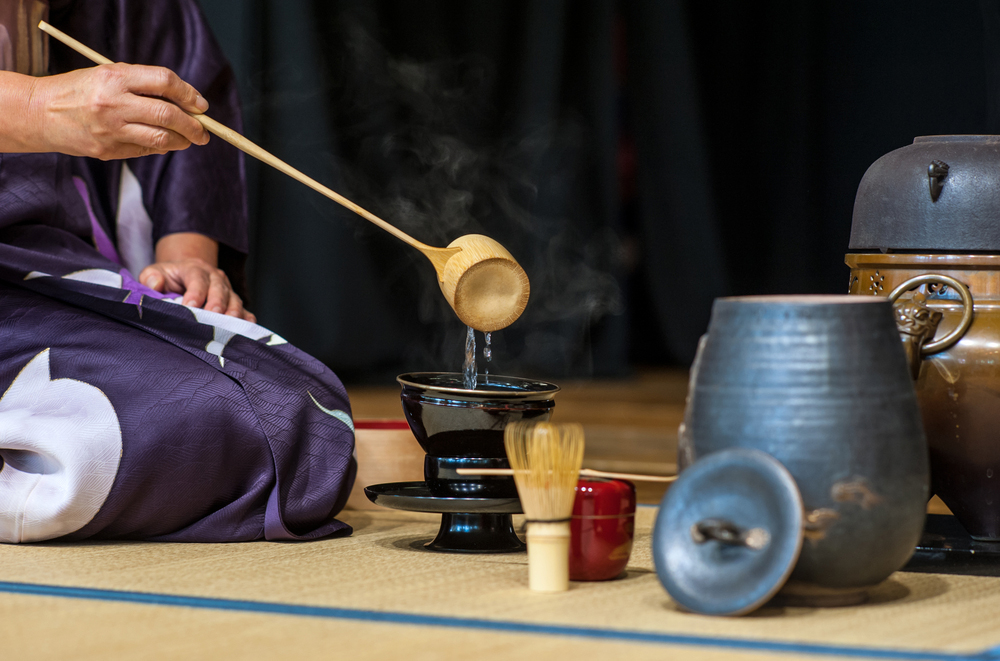
“This concept can be seen in the Japanese tea ceremony and the Ikebana flower arrangement,” Katano told Arab News.
“The main theme in these art forms is concentration, while working under strict regulations in an environment of respect and harmony.”
Shifa Zghoul, an architect, designer and researcher who lived in Japan for 22 years before moving back to her home country Jordan, described the Japanese people as “kind and warm people who are very hardworking” and who “appreciate” other hard workers.
“Once a friendship is formed, you become family to them,” she said.
“Their lack of ways of communication, due to language barriers, makes them extra shy about reaching out to foreigners.
“However, once they overcome such barriers, they dip deep into other cultures to learn more about them.”
Zghoul, who first moved to Japan in 1996, said she has interacted with Japanese people and experienced the environment as a student, an architect and most recently as the wife of an ambassador.
“The Japanese people respect teamwork, which is lacking in our side of the world,” she said. “They work in teams and are very organized, and their culture is a great source of inspiration and energy in their lives.”
Portrayed to be a population that is more focused on their own country, the younger generation of Japan is more “curious” and tend to think outside the box, said Zghoul.
“Most of the older generations remain island people, whose entire world is just Japan.”
Arabs look to a land of samurai, sushi and carsArabs’ interest in Japan is an untapped economic potential https://ift.tt/2Jqa3vZ October 27, 2019 at 10:01PM
DUBAI: A YouGov survey of 3,033 respondents in the Middle East and North Africa has found that over 50 percent of Arabs picked “samurai”, “car manufacturing” and “sushi” as aspects they most associate with Japan.
Riding the bullet train proved to be an exciting prospect for Arabs across all age groups, with 63 percent saying it is among the top three attractions in Japan.
For Dubai-based architect Mohamed Rowaizak, 24, from Egypt, riding the bullet train was an unforgettable experience. “It was like time travel. It was definitely too fast for me,” he said.
However, it was the architecture and art scene that Rowaizak fell in love with during his trip to eight Japanese cities in 2016.
“The buildings had a historical presence and I loved seeing the work of Tadao Ando, a famous Japanese architect,” he said.
More than half of Arabs aged 16 to 24 said that they were interested in Japanese cuisine.
Unlike many others from his generation, Rowaizak did not dwell over the country’s customary tourist stops such as the hub of anime, Akihabara, or the various sushi bars in every city, but focused on experiencing the Japanese lifestyle as authentically as possible.
“I stayed with locals during my visit to Kyoto who were very generous and introduced us to different aspects of the culture, such as the kimono,” Rowaizak said.
“I took a trip with a group of friends to Naoshima, an island town in Japan, where I was able to experience the refreshingly simple life of the residents.”
The survey also found that among respondents who are aged 40 or above, 81 percent would like to visit Japan for its environment, along with its national parks, World Heritage sites, and Mount Fuji.
Other attractive aspects of Japanese culture included learning more about traditional arts and rituals, including the tea ceremony.
“I think there is a gap in what people think Japan is about and what you actually experience there,” Rowaizak said.
“The culture is a lot deeper than the rituals, which of course have meaning and significance, and have been passed down through generations. I found that the people behind these aspects of the culture and architecture are even more valuable.”
Caption
Meanwhile, over half of Arabs aged 16 to 24 said they were more interested in the gastronomic experience, with local Japanese cuisine cited as one of the main motives for travel.
This was the case for Salma Al-Shahed, a 27-year-old Dubai resident who was surprised by the variety of Japan’s culinary offerings during her visit in October.
“The list of top attractions in Japan is endless, but if I were to name just three, I would say the nature, architecture and the food. Even the non-Japanese food is incredible and I am yet to have Western-style breads and baked goods as good as the ones I had in Tokyo,” she said.
Al-Shahed said she enjoyed getting lost in Tokyo’s beautiful alleys, which often led to discoveries of hidden restaurants and timeless shops.
“I did not think that I would enjoy the random walks through neighbourhoods like Nakameguro and Daikanyama as much I did,” she told Arab News.
“I learnt the hard way than when in Japan, do not plan everything and allow yourself to get lost in Tokyo. You may find something that is even better than what you had seen in a guide or blog.”
The survey also revealed that 50 percent of Arabs associate natural disasters with Japan, with earthquakes being particularly higher on the list for respondents from North African countries.
Speaking from experience, Shifa Zghoul, a previous long-term resident of Japan, said the Japanese people are well-prepared for earthquakes.
Most schools and community centers frequently conduct drills with clear instructions on what to do in case of earthquakes.
“I experienced the big earthquake that hit Japan in 2011, and I was so impressed by the calmness of the Japanese people,” Zghoul told Arab News.
“They avoided elevators and used the stairs on one side, leaving space for others. In supermarkets, they would only take one or two packs of food items and leave some out of courtesy for others.”
Throughout her stay in Tokyo, Zghoul said she was usually approached by residents and neighbours during an earthquake who rushed to comfort her and her family and assist them in ensuring the protocols were followed in case of an emergency.
“News alarms and the radio all played an important role in keeping everyone updated and informed,” she said.
“We were always informed of the emergency escape locations, which in my case were either the nearby school hall or the big Yoyogi park.”
Survey shows Japanese martial arts to be a big hit with ArabsArab consumers associate Japan with high quality https://ift.tt/31S2TXE October 27, 2019 at 09:28PM
DUBAI: Call of Duty is a name all gamers are familiar with — a video game series that has traditionally told a story with over-the-top action and cinematics.
The story behind 2019’s Call of Duty: Modern Warfare, released on Oct. 25, does the exact opposite of that, instead choosing to put players in a difficult position of moving them from a movie to an imitation of real-world events, albeit fictionalized, but nonetheless intended to make them feel responsible for their actions.
Gamers were invited to preview the game at Dubai’s Skydive Desert Dropzone to experience the ambience of Modern Warfare’s Middle Eastern setting on Thursday.
For the first time, Call of Duty supports cross-platform multiplayers. (Supplied)
After missing a campaign from the series in Black Ops 4, Modern Warfare’s storytelling explores what war really is and players will have to watch deeply unsettling and uncomfortable scenes with some shock and awe imagery. The message is clear — war is not a game. It is an excellent story that brings back some old favorite characters and brings women into the heart of conflict.
There are several modes in Call of Duty: Modern Warefare’s multiplayer arsenal, the main reason why a lot of its massive fan base will buy the title. The publisher and developer have been praised for breaking away from the mold, amid a sea of battle-royale games such as Fortnite.
Women feature heavily in the game. (Supplied)
For the first time, Call of Duty supports cross-platform multiplayers allowing players to join their friends across PC, Xbox One and Playstation 4. They have also promised that to some degree, traditional micro transaction mechanics such as loot boxes or season passes have been removed.
Publisher Activision, however, has included a “Survival” mode that is exclusive to the Playstation 4 for a year. This is a move that some may find disingenuous, given how much emphasis has been made to deliver the complete experience to everyone, regardless of the platform.
The multiplayer pushes you to be quick on your fingers and check your surroundings constantly — as I learnt the hard way. The mode I enjoyed the most is Gunfight, that’s a 2 vs 2 player mode; both teams start with the same level field and the matches are fast paced. I see this mode being the most popular among the traditional options it offers.
The multiplayer pushes you to be quick on your fingers and check your surroundings constantly. (Supplied)
DUBAI: Beauty mogul and superstar singer Rihanna was spotted wearing footwear by Jordanian-Romanian designer Amina Muaddi in Los Angeles over the weekend, becoming the latest in a glittering lineup of celebrities to flaunt her designs.
Rihanna sat courtside at a basketball game between the Los Angeles Lakers and the Utah Jazz at the Staples Center on Oct. 25 and showed off a casual all-white ensemble accessorized with layered necklaces, chunky hoop earrings and sandals by Amina Muaddi.
One of Rihanna’s necklaces featured the ankh symbol, used in ancient Egypt as a symbol of life. The Amina Muaddi shoes, dubbed the Gilda heels, boasted two diamante-studded straps.
Rihanna was spotted wearing footwear by Jordanian-Romanian designer Amina Muaddi in Los Angeles. (Getty Images)
“Rih in her Gilda sandals at the Lakers game. A whole weekend mood (sic),” the fashion house posted on Instagram.
Muaddi is fast becoming a celebrity favorite and Rihanna isn’t the only musician to have been spotted sporting a pair of her heels. Former Destiny’s Child singer Kelly Rowland was spotted at the opening of director Tyler Perry's new studio in Atlanta in October wearing a slinky pair of sling backs by the designer. A day later, she hit the red carpet in a dark-green ensemble with sparkling heels by Muaddi, which she wore with a jade green mini dress by Lebanese designer Nicolas Jebran. Rowland even took to social media to gush over her latest pair of Amina Muaddi heels, posting an Instagram Story in which she waxes lyrical about her “fly” new shoes.
Muaddi has been in the spotlight as of late, with the likes of Kylie and Kendall Jenner, Rihanna and British model Rosie Huntington-Whiteley showing off her heels in recent months.
Kylie boasted a pair of the “Lupita” glass slippers at the launch of her new skincare line, Kylie Skin, at the end of May, while her older sister Kendall finished off a skin-tight minidress with the Gilda rainbow sandals while in Cannes in May.
Back in April, Rihanna — who is clearly a fan of the part-Jordanian footwear maven — was spotted in New York wearing a black coat with strappy white sandals by Muaddi while reportedly out and about with her Saudi beau Hassan Jameel.
Meanwhile, Huntington-Whiteley has been an avid fan for quite some time and regularly takes to Instagram to show off Muaddi’s latest designs.
Muaddi’s footwear label is designed in Paris and produced in Italy.